
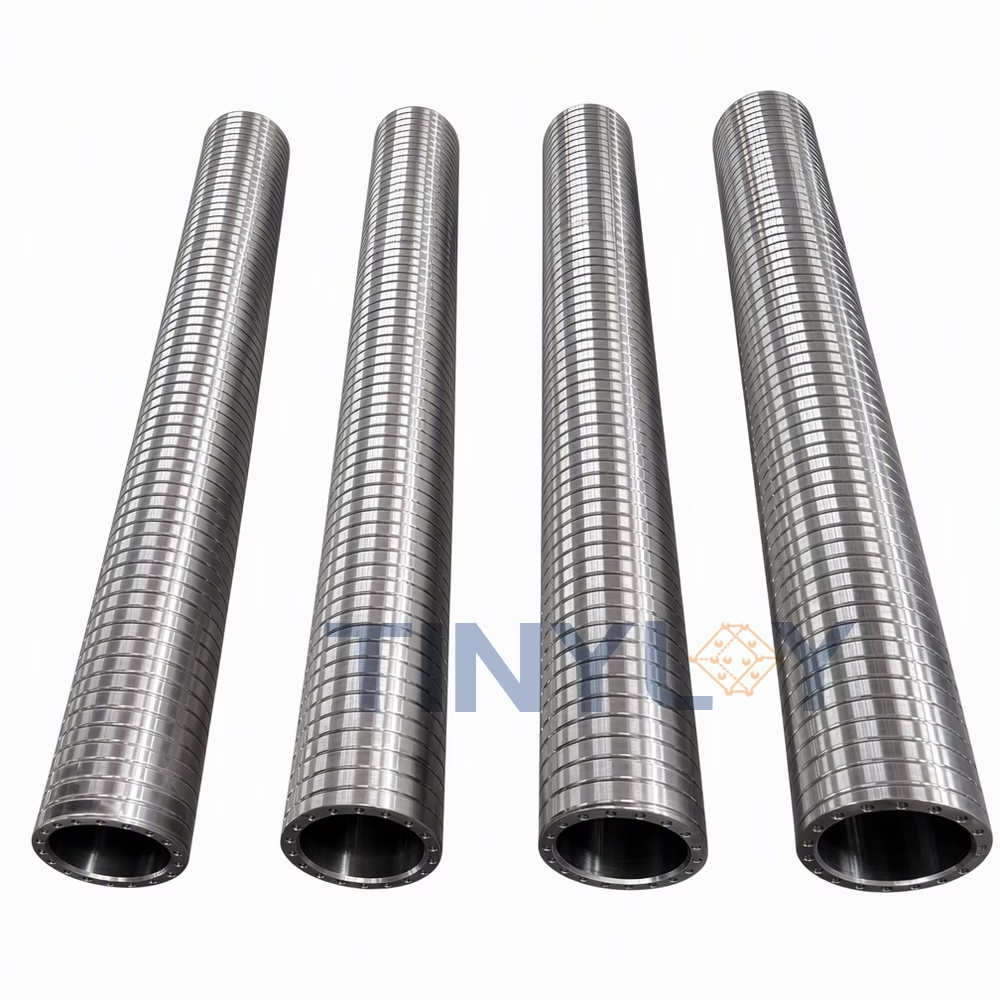
A286 Non-Magnetic Roller Sleeve for Steel Mill EMS Systems

Product Overview

The A286 non-magnetic roller sleeve is a finished, precision-machined component developed for demanding steelmaking equipment, especially in-roll electromagnetic stirrer (EMS) systems used in continuous casting. Manufactured from A286 (UNS S66286 / GH2132), it combines stable low magnetic permeability, high-temperature strength, corrosion and oxidation resistance, and reliable dimensional stability.

The roller sleeve is supplied as a finished component and can be manufactured according to customer drawings, equipment interfaces, assembly requirements, and inspection criteria.

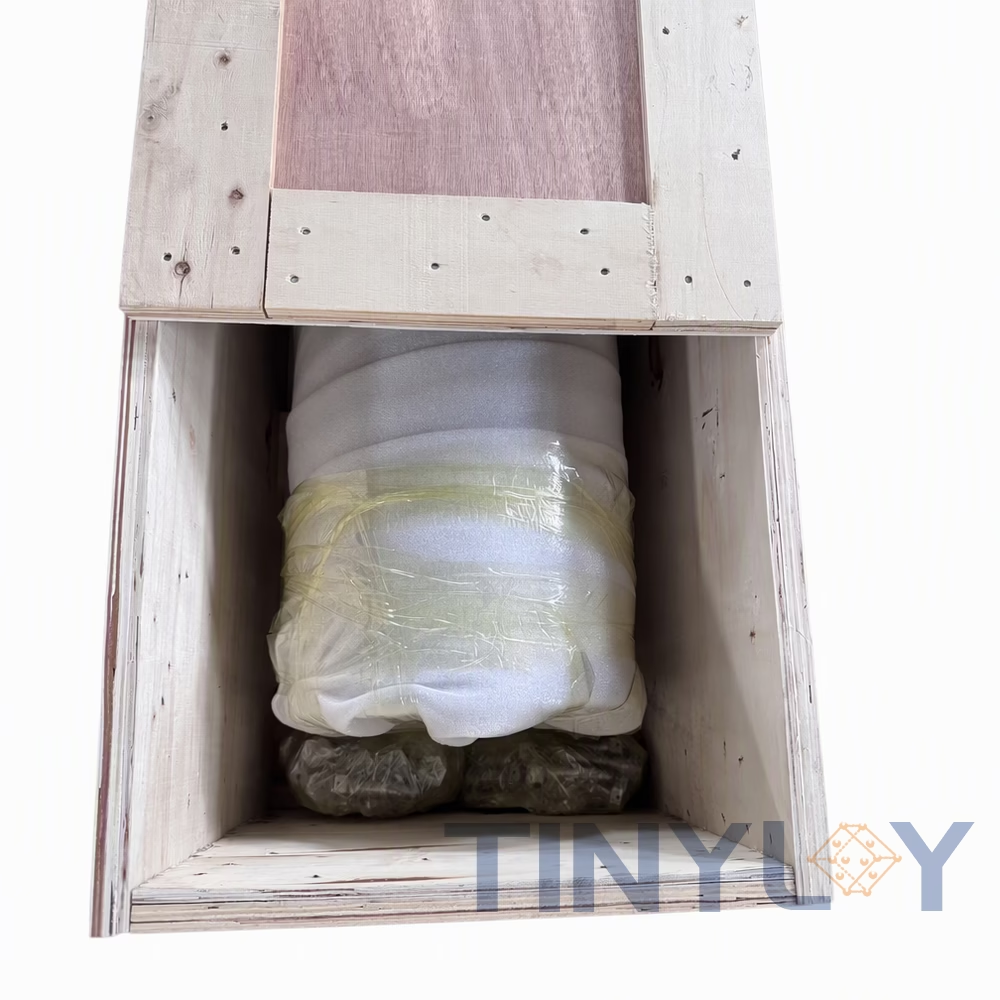
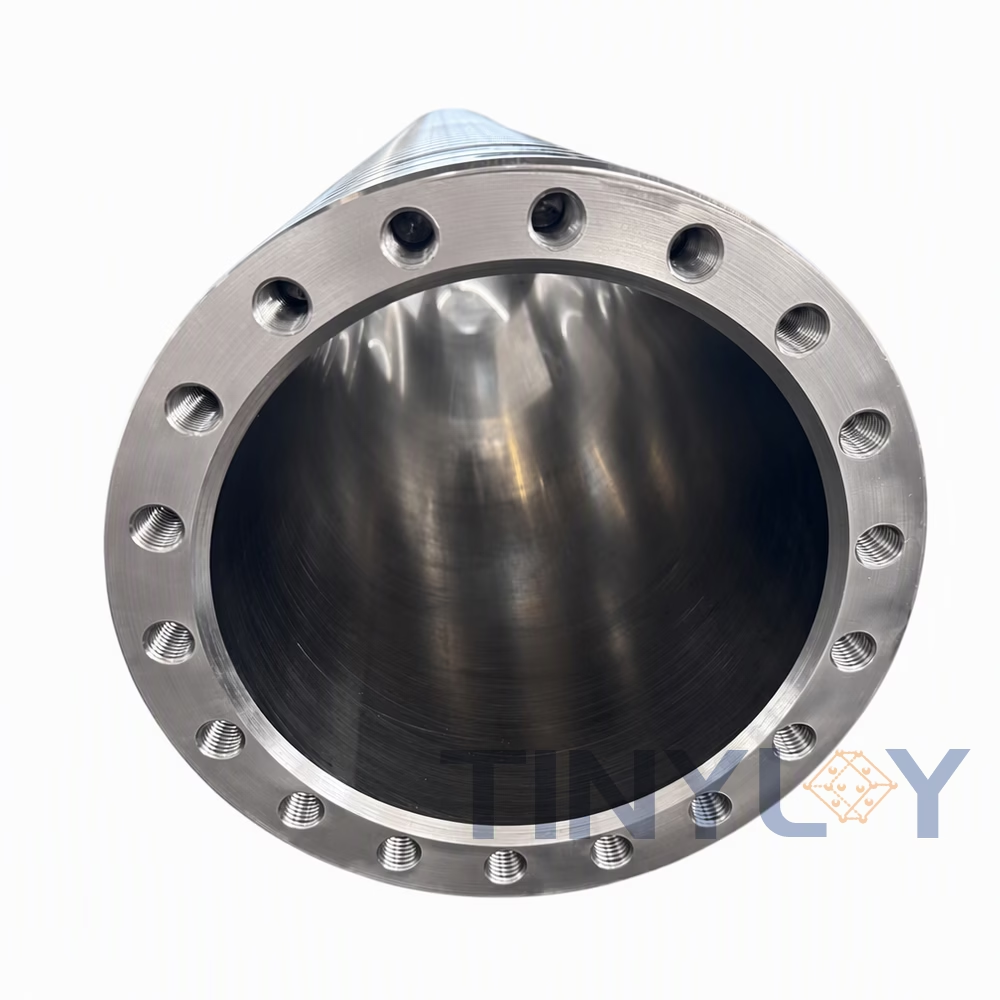
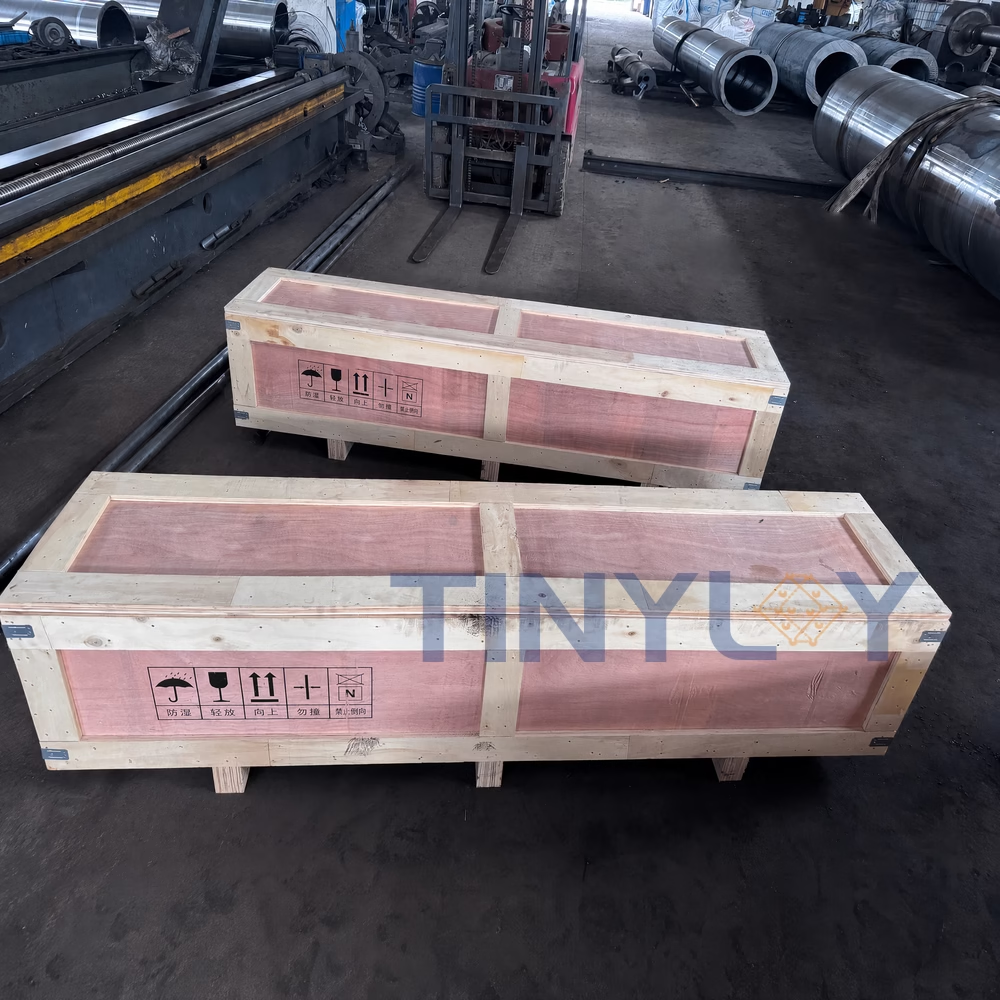
A286 non-magnetic roller sleeve A286 packing TINYLOY TINYLOY A286 detail A286 non-magnetic roller sleeve

Get In Touch with Us

Specification Introduction

Technical Specifications

Performance Indicator Parameter Data Remarks
Material Grade A286 / GH2132 / UNS S66286 Equivalent German grade: 1.4980
Crystal Structure and Magnetic Property Austenitic / Non-magnetic Very low magnetic permeability; stable across a wide temperature range
Service Temperature Range −253°C to 650°C Short-term service temperature up to 704°C
Tensile Strength at Room Temperature ≥ 895 MPa (aged condition) Typical value: 930–1180 MPa
Yield Strength at Room Temperature ≥ 585 MPa (aged condition) Typical value: 680–725 MPa
Elongation Standard: ≥ 15% Our product can achieve more than 20%, subject to the agreed specification and test report
Hardness 248–341 HBW (HRC 32–38) After precipitation-hardening treatment
Density Approximately 7.93 g/cm³ —

Typical Applications

  • In-roll electromagnetic stirrer (EMS) systems for continuous casting equipment
  • Roller and end-shaft assemblies used in steelmaking machinery
  • Non-magnetic sleeve components requiring stable electromagnetic-field transmission
  • High-temperature rotating or stationary components requiring dimensional stability
  • Customized replacement components for overseas steel mill equipment

Manufacturing Process and Quality Control

  • Melting: Vacuum induction melting (VIM) followed by electroslag remelting (ESR), with strict control of low-melting-point impurities such as lead and bismuth, as well as gas content.
  • Heat treatment: Standard solution treatment at 980–1000°C followed by rapid cooling, then two-stage aging at 700–720°C with air cooling, to promote uniform precipitation of the γ′ phase (Ni₃Ti/Al).
  • Precision machining: Inner bore and outer diameter are finished by high-precision CNC machining and grinding to meet dimensional tolerance and surface-finish requirements.
  • Inspection: Ultrasonic testing (UT), eddy-current testing (ET), magnetic-permeability remeasurement, and applicable dimensional inspections can be performed before delivery.
  • Documentation: Material Test Certificate (MTC), traceability records, and third-party mechanical-property reports can be provided according to the purchase specification.

Key Product Advantages

  • Stable non-magnetic performance: The austenitic structure provides very low magnetic permeability and stable performance across a wide temperature range, helping reduce interference with EMS electromagnetic fields.
  • High-temperature strength and dimensional stability: Precipitation hardening with titanium and aluminum supports strength retention and resistance to deformation under elevated-temperature service.
  • Corrosion and oxidation resistance: Chromium-containing alloy chemistry supports resistance to oxidation and corrosion in demanding industrial environments.
  • Precision-machined finished component: Inner bore, outer diameter, end faces, bolt-hole patterns, threads, and other interfaces can be produced to drawing and assembly requirements.
  • Application-proven performance: The product has undergone large-scale validation and end-use application at overseas steel mills, providing practical operating experience in demanding steelmaking environments.
  • International quality benchmark: Under the agreed technical specification and inspection plan, product quality is controlled to a level comparable with equivalent products from leading Japanese suppliers, including the relevant product benchmark associated with Nippon Steel.
  • Independent inspection supported: Third-party testing can be arranged for chemical composition, hardness, tensile strength, and high-temperature stress-rupture performance.